AI and Human Creativity: How They Can Work Together

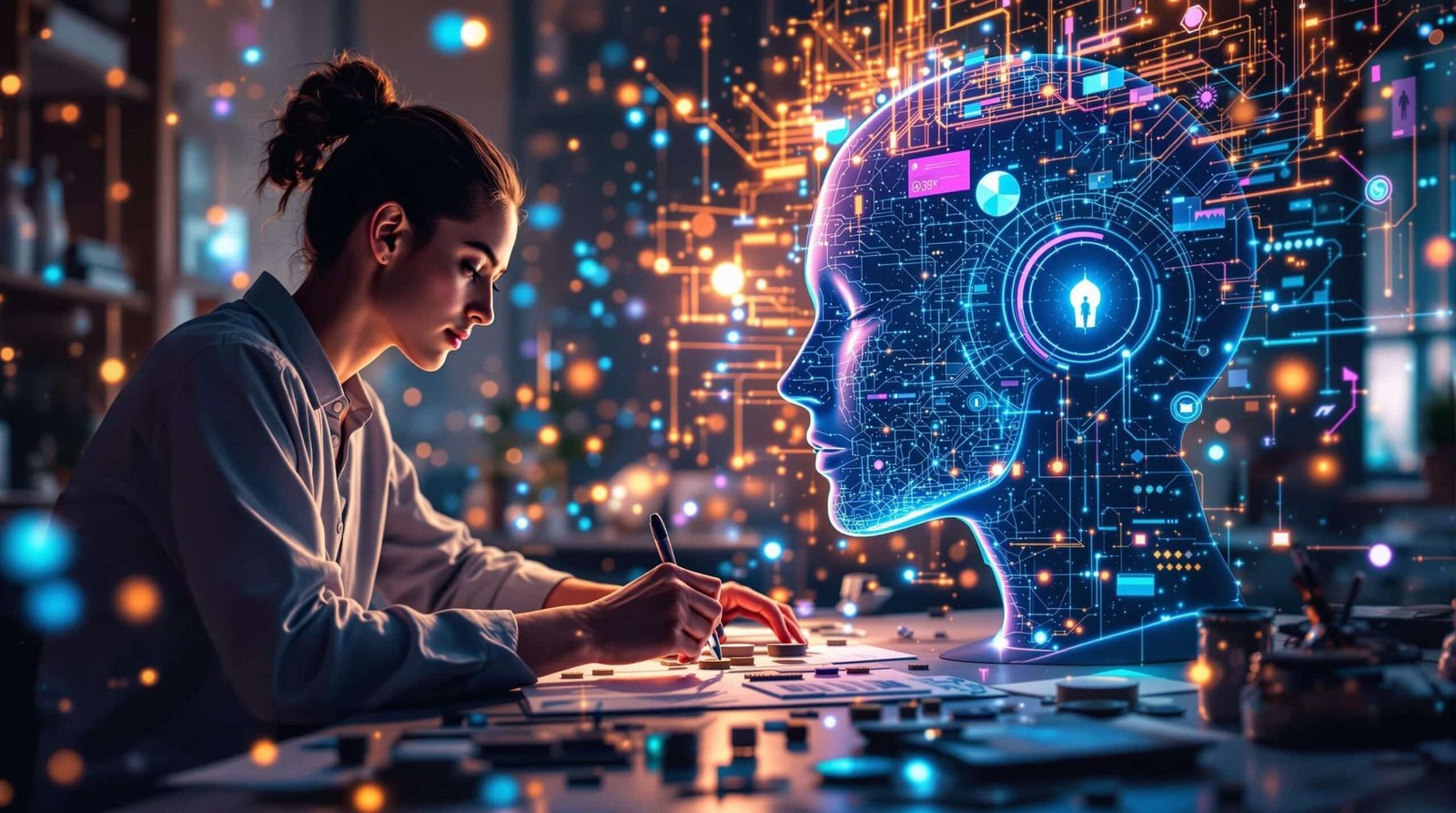
Artificial intelligence (AI) is changing the way people work, create, and solve problems. From generating ideas and writing content to creating designs and analyzing information, AI technology has become a useful tool across many industries.
However, AI does not have to replace human creativity. Instead, AI and human creativity can work together to help businesses and individuals work more efficiently while producing better ideas, solutions, and experiences.
Understanding AI and Human Creativity
AI is designed to process large amounts of information, recognize patterns, generate content, and assist with repetitive tasks. AI creative tools can help people save time and explore different possibilities quickly.
Human creativity, on the other hand, comes from personal experiences, emotions, imagination, critical thinking, and understanding of people and their needs.
While AI can generate multiple ideas in seconds, humans bring purpose, emotion, context, and originality to those ideas.
This makes human creativity and artificial intelligence complementary rather than competing forces.
How AI Supports Human Creativity
1. Generating New Ideas
One of the biggest advantages of AI is its ability to help with brainstorming. When someone is stuck on an idea, AI can suggest different concepts, topics, headlines, designs, or approaches.
These suggestions can give creators a starting point and help them explore possibilities they may not have considered.
For example, writers can use AI to explore content topics, while designers can use AI creative tools to experiment with different visual concepts.
The final idea can then be refined using human knowledge, experience, and creative judgment.
2. Saving Time on Repetitive Tasks
Creative professionals often spend a significant amount of time on repetitive work. AI can assist with tasks such as organizing information, creating initial drafts, summarizing content, or analyzing data.
By reducing the time spent on these activities, people can focus more on strategic thinking and creative decision-making.
This is one of the key benefits of AI and human collaboration. Instead of spending most of their time on repetitive tasks, professionals can dedicate more time to developing original ideas and improving their work.
3. Improving the Creative Process
AI can be used throughout different stages of a project. For example, a designer can use AI to explore visual concepts before developing the final design.
Similarly, a content writer can use AI to brainstorm topics or create an initial structure before adding their own ideas and expertise.
This creates a workflow where AI supports creativity while humans remain responsible for the creative direction.
Why Human Creativity Still Matters
AI can generate content based on patterns and information, but human creativity provides something different.
Humans understand emotions, cultural context, personal experiences, and real-world situations. They can also make decisions based on values, purpose, and the specific needs of an audience.
For example, AI may generate several marketing messages, but a human can determine which message feels authentic to a particular brand and its customers.
Human judgment is also important for checking accuracy, originality, tone, and relevance.
This is why human creativity in the age of AI continues to play an important role. Technology can support the creative process, but people provide the ideas, decisions, and context that give those creations meaning.
Finding the Right Balance
The goal is not simply to choose between AI and humans. Instead, businesses can explore how AI and human creativity can complement each other.
A simple creative workflow can look like this:
Human Idea → AI Assistance → Human Review → Creative Refinement → Final Result
In this process, humans define the objective and creative direction. AI helps generate ideas or speed up certain tasks. Humans then review, edit, and improve the output to make sure it meets the required quality and purpose.
This balanced approach can help organizations use AI technology and innovation without losing the human element behind their work.
AI as a Creative Partner
When used thoughtfully, AI can act as a creative partner rather than simply a tool.
For writers, AI can help with brainstorming, research, and initial content structures.
For designers, AI can help explore different concepts and creative directions.
For developers, AI can assist with problem-solving, code generation, and exploring technical approaches.
For marketers, AI can help analyze information and develop content ideas.
In each case, the human remains an important part of the process by providing direction, judgment, creativity, and understanding of the target audience.
The Future of AI and Creativity
As AI technology continues to develop, the relationship between technology and human creativity will continue to evolve.
Businesses that learn how to combine AI capabilities with human skills can create more efficient workflows and explore new creative possibilities.
The goal should not be to make creativity entirely automated. Instead, AI can handle certain time-consuming tasks while people focus on the areas where human thinking, imagination, and emotional understanding are most valuable.
The future of AI and creativity will likely involve greater collaboration between people and intelligent technologies, with each contributing different strengths to the creative process.
Conclusion
AI and human creativity can work together to create a more flexible and efficient creative process. AI can help generate ideas, process information, reduce repetitive work, and support creative exploration, while humans provide creativity, emotion, judgment, and purpose.
The future of creativity does not have to be AI versus humans. It can be AI and humans working together.
When technology is used as a support system rather than a replacement for human thinking, it can help people spend more time creating, experimenting, solving problems, and turning ideas into meaningful results.